A clutter-free kitchen counter can make the entire room feel cleaner, calmer, and easier to use. When counters are covered with appliances, mail, dishes, and food packages, even simple tasks can feel frustrating. The good news is that you do not need a large kitchen or expensive storage products to create a more organized space.
With a few thoughtful changes, you can decide what belongs on the counter, find better homes for everyday items, and build habits that keep clutter from returning.
Start With a Clean Slate
Before organizing your kitchen counters, remove everything from the surface. Place items on a nearby table, the floor, or another temporary area. This gives you a clear view of the space and helps you notice how much you are storing on the counters.
Clean the empty counters with a suitable household cleaner. Starting with a clean surface makes the organizing process feel more rewarding and gives you a fresh foundation.
As you sort through the items, place them into four groups:
– Keep on the counter
– Store in a cabinet or drawer
– Move to another room
– Donate, recycle, or discard
Try not to put everything back automatically. Each item should earn its place based on how often you use it and whether it needs to remain within easy reach.
Decide What Deserves Counter Space
Kitchen counters are valuable working areas, so they should hold only items that are used often or serve a practical purpose. Common examples include:
– A coffee maker used every morning
– A toaster used several times a week
– A knife block or cooking utensil holder
– A fruit bowl
– A cutting board used daily
Items that are used only occasionally usually belong in a cabinet, pantry, or storage closet. This may include specialty appliances, serving dishes, baking tools, and seasonal decorations.
A useful question is: “Would I use this item enough to justify giving it permanent space?” If the answer is no, store it elsewhere.
You can also create a simple counter limit. For example, allow only three or four permanent items on a particular section of the counter. A clear limit makes it easier to make decisions and prevent gradual buildup.
Group Similar Items Together
Grouping related items helps your kitchen look more orderly and makes daily tasks faster. Instead of spreading items across the counter, create small, purposeful zones.
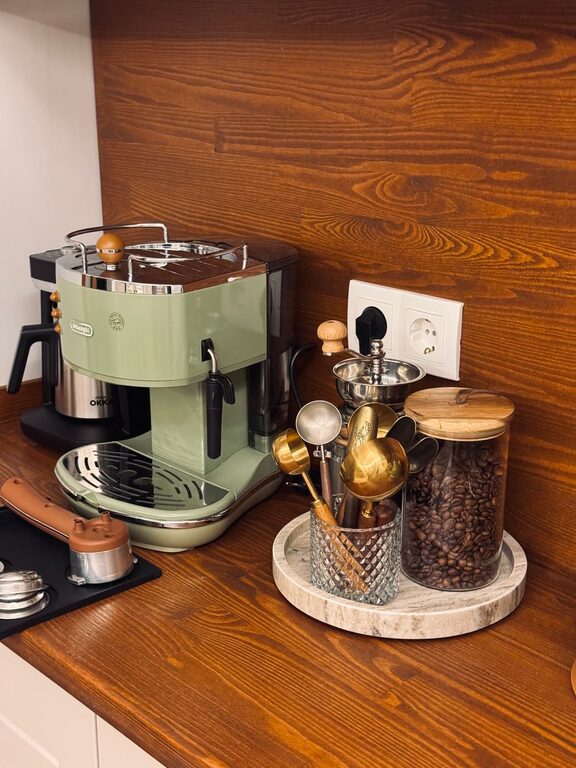
Create a Beverage Station
Place your coffee maker, tea supplies, mugs, sweeteners, and filters in one area. Keep only the items you use regularly on the counter. Extra supplies can go in a nearby cabinet or labeled container.
Organize a Cooking Zone
Store frequently used cooking tools near the stove. A small container can hold wooden spoons, spatulas, and tongs. Keep the container narrow enough that it does not take over the workspace.
Set Up a Food Prep Area
Keep a cutting board, frequently used knives, and a bowl for scraps near the area where you prepare food. If the cutting board is attractive and easy to clean, it can serve as both a practical tool and a tidy visual feature.
Grouping items by activity creates a natural flow. You will spend less time searching for supplies and be less likely to leave items scattered around the room.
Make Better Use of Cabinets and Drawers
A cluttered counter often points to an underused cabinet or drawer. Look for ways to improve the storage space you already have.
Shelf risers can create an extra level inside cabinets, while drawer dividers keep utensils from becoming mixed together. Pullout bins can make deep cabinets easier to access, and a lazy Susan can help organize sauces, spices, or cooking oils.
Consider storing appliances based on how often you use them:
– Daily-use appliances can stay on the counter.
– Weekly-use appliances can go in an easy-to-reach cabinet.
– Occasional-use appliances can be stored higher up or in a pantry.
Use vertical space whenever possible. Wall-mounted racks, magnetic knife strips, and hooks can move items off the counter without hiding them completely. Choose storage solutions that are secure, easy to clean, and suitable for your kitchen layout.
Contain Small Items
Small objects create visual clutter quickly. Pens, rubber bands, seasoning packets, receipts, and loose tools can make a clean counter look untidy within minutes.
Use small containers or trays to keep these items together. A single tray for frequently used cooking oils is easier to manage than several bottles scattered around the stove. A small basket near the refrigerator can hold notes, shopping lists, or reusable bags.
Be careful not to use containers as an excuse to keep too much. Sort through the items first, then choose a container that fits the amount you actually need. If the container is overflowing, it is time to remove a few things.
Create a Home for Paper and Mail
Mail and paperwork are common sources of kitchen counter clutter. Choose one location for incoming papers, such as a wall organizer, a small basket, or a designated drawer.
Sort mail as soon as possible:
– Recycle unwanted advertisements.
– File important papers.
– Place bills or reminders in a calendar or task system.
– Move personal documents out of the kitchen.
A paper-free approach can also help. Store digital receipts, menus, and lists on your phone when practical. The goal is not to create a complicated system but to prevent papers from spreading across the counter.
Keep the Refrigerator Front Simple
The refrigerator is often treated as extra storage for calendars, invitations, artwork, and notes. While a few personal items can make the kitchen feel welcoming, too many magnets and papers can add to the sense of clutter.
Choose only the items that are useful or meaningful. Keep a small section for current reminders and remove outdated papers regularly. If children display artwork, consider rotating pieces or using a dedicated display area elsewhere.
Use a Daily Reset Routine
A short daily reset is one of the most effective ways to maintain clutter-free counters. At the end of the day, spend five to ten minutes returning items to their proper homes.
Your routine might include:
- Clearing dishes and placing them in the dishwasher or sink.
- Returning appliances and tools to storage.
- Throwing away wrappers and food packaging.
- Wiping the counters.
- Sorting mail and other papers.
- Checking whether any item was left without a permanent home.
Try to complete this routine after dinner or before going to bed. A clean counter in the morning makes the kitchen more pleasant and gives you a fresh start.
Follow the One-In, One-Out Rule
When you add a new kitchen item, consider removing or donating something similar. For example, if you buy a new countertop appliance, decide whether an older appliance still serves a purpose.
This rule is especially useful for mugs, food containers, water bottles, and cooking tools. It prevents storage areas from becoming overcrowded and encourages more thoughtful purchases.
Make Clutter Less Likely to Return
Once your counters are organized, pay attention to the habits that caused the clutter. If keys always land beside the sink, add a small hook or bowl near the entrance. If snacks collect on the counter, create a pantry bin for them. If appliances are difficult to store, move them to a more accessible cabinet.
An organized kitchen should support the way you actually live. The best system is not the one that looks perfect in a photograph; it is the one that is easy to use every day.
Start with one section of the counter, make clear decisions, and build from there. With practical storage and a simple reset routine, keeping your kitchen counters clutter-free can become a natural part of your daily life.